Hello, I am Hide Arai from the Research and Development Department.
“I can’t reach that itchy spot on my back.”
Most of us have experienced that frustration at least once.
In metalworking, deburring presents a similar kind of irritation: burrs left at cross-hole intersections deep inside a bore. These areas are difficult to access, and conventional tools may not reach them.
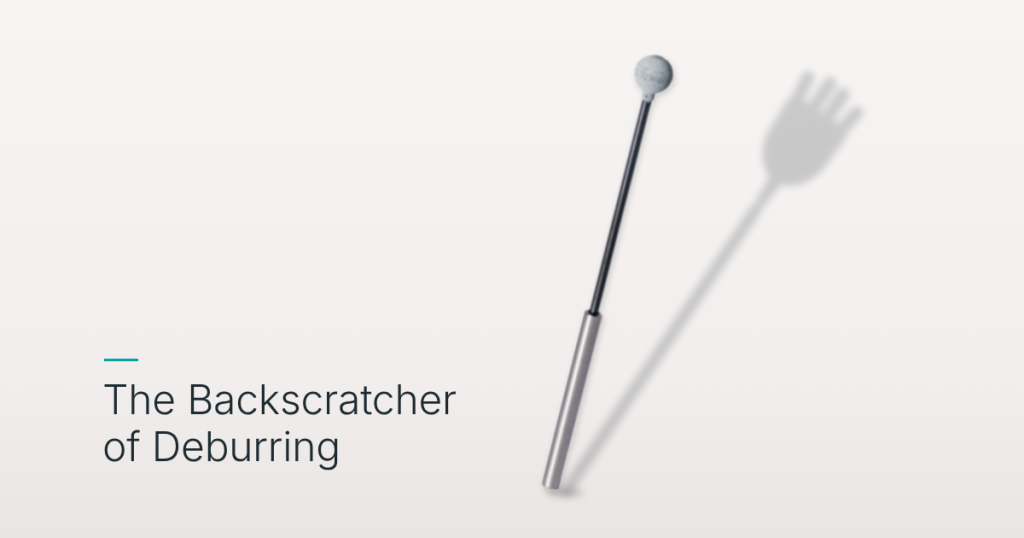
Fortunately, there is a tool that works like a backscratcher, reaching those troublesome spots: XEBEC Stone™ Flexible Shaft, referred to below as the Flexible Shaft.
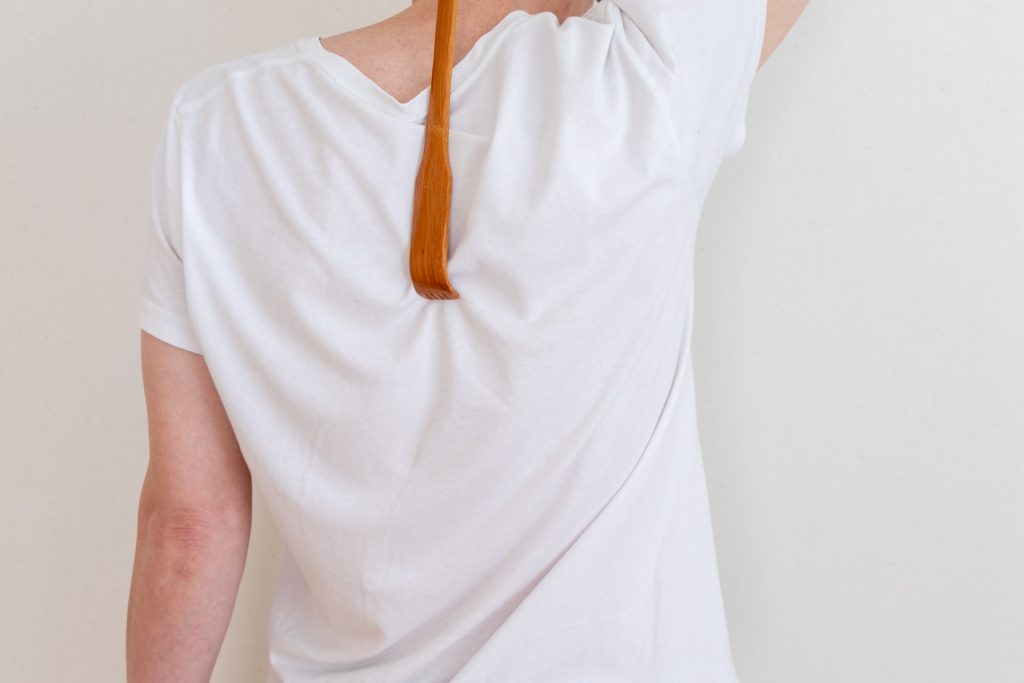
A backscratcher lets you scratch areas, such as your back, that you cannot reach with your own hand. Its long, slender handle and hand-shaped tip provide quick relief from an otherwise inaccessible itch.
It does exactly what you need: reaches the spot that is bothering you.
At its simplest, a backscratcher is a tool for removing a small irritation in a place you cannot reach.
Burrs at cross-hole intersections deep inside a bore are much like an itch on your back. They may be small, but they cannot be ignored.
The Flexible Shaft is an effective tool for removing these troublesome burrs.
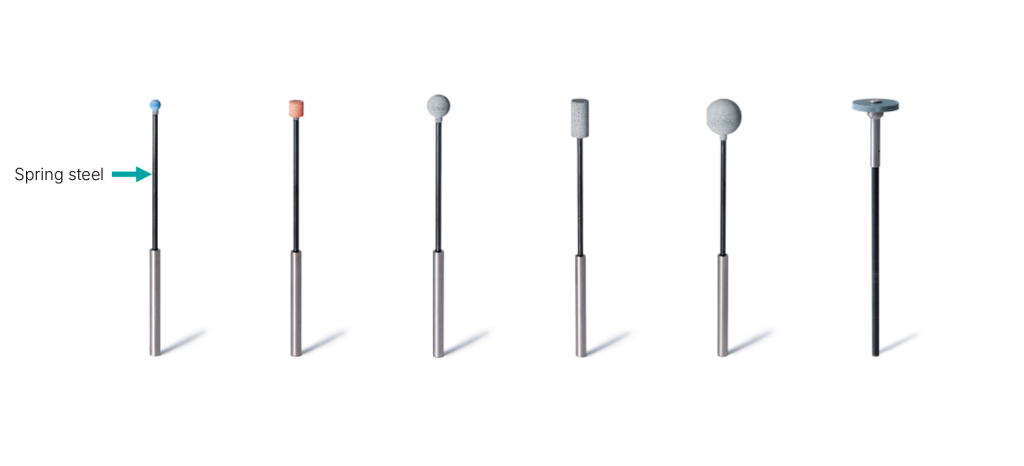
The Flexible Shaft is a deburring attachment used with a rotary tool, such as an electric rotary grinder.
Its main feature is a shaft made of spring steel. This allows gentle contact with the workpiece and helps suppress chatter during machining.
Another key feature is its length.
Its overall length is greater than that of conventional mounted points. This extra reach is particularly effective when deburring areas such as cross-hole intersections deep inside a bore.
Let’s compare it with a conventional mounted point that has the same abrasive head shape.
| Product | Abrasive head diameter (mm) | Overall length (mm) |
| Company A mounted point | 10 | 50 |
| XEBEC Stone™ Flexible Shaft CH-PM-10B |
10 | 75 |
| XEBEC Stone™ Flexible Shaft CH-PM-10B-L |
10 | 155 |
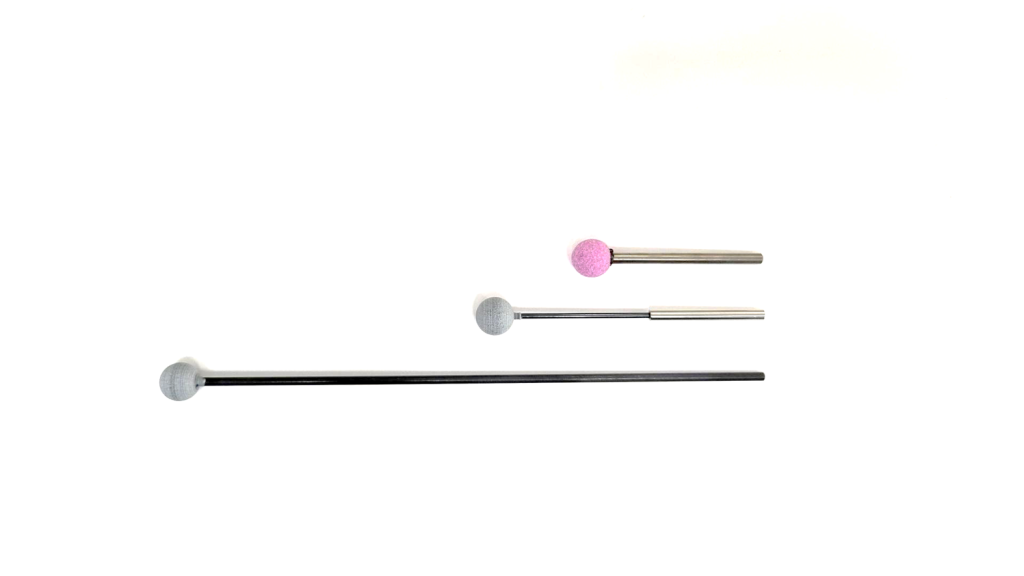
As shown above, the Flexible Shaft is approximately 1.5 to 3 times as long as a conventional mounted point.
This allows it to reliably reach cross-hole intersections that were previously inaccessible.
Why are conventional mounted points relatively short? One reason is that they are designed for ease of control.
When operating a mounted point with a rotary grinder, we can identify three points:
These points form the arrangement of a third-class lever.
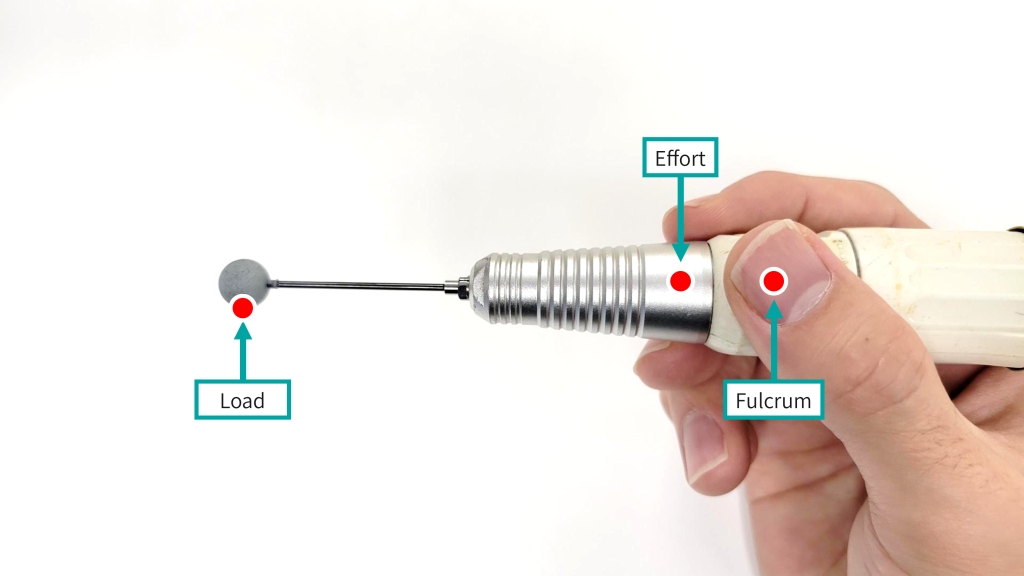
With a short tool, the distance between the effort point and the load point is small. This makes it easier to make fine adjustments to force and angle, allowing precise control.
With a longer tool, the distance increases. Slight hand movements or changes in angle are amplified at the tool tip.
As a result, the abrasive head may contact the workpiece unevenly during deburring, making an inconsistent finish more likely.
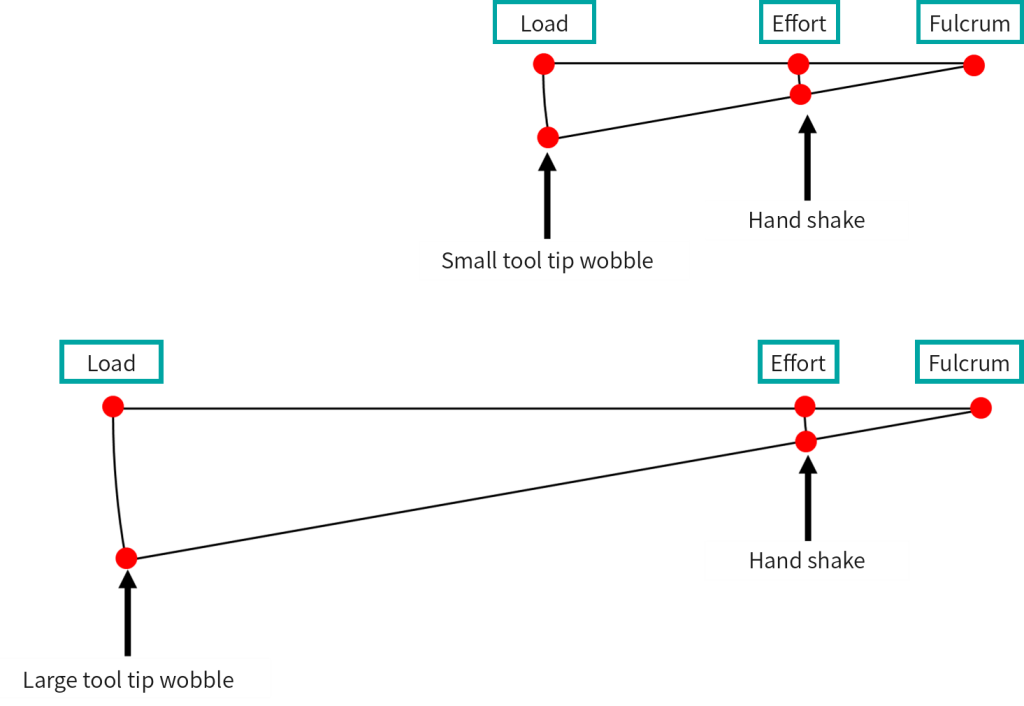
What makes the Flexible Shaft distinctive is its ability to produce a consistent finish despite its length.
The spring-steel shaft flexes to absorb changes in grinding load caused by the amplified hand movements that commonly affect long tools. This prevents sudden changes in the force with which the abrasive head contacts the workpiece, helping keep contact pressure more uniform. The result is a more consistent finish, with considerably less variation.
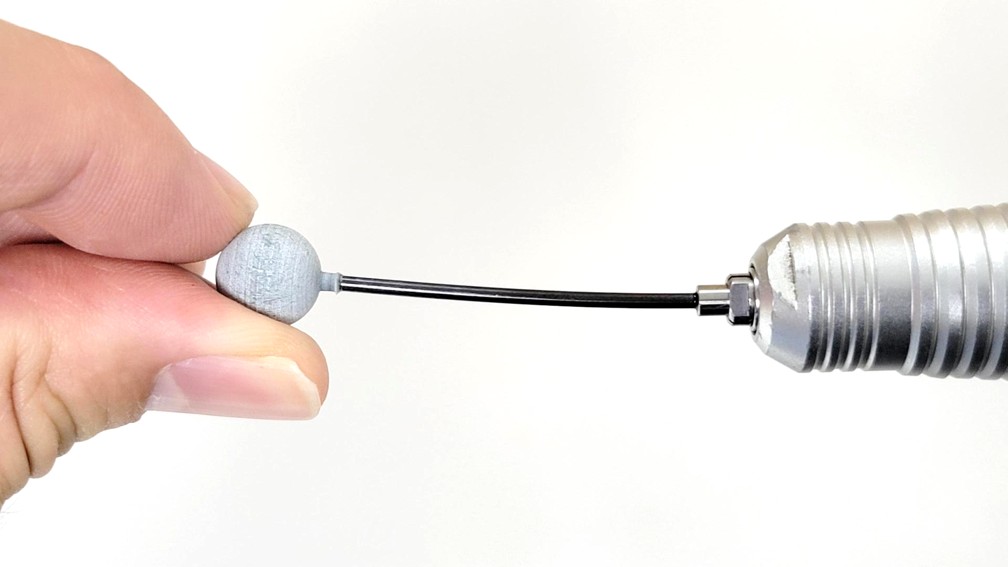
The slender shaft also provides a clearer view of areas deep inside the workpiece. Even where visibility is limited, such as at cross-hole intersections inside the bore of a long, narrow workpiece, the tool itself does not obstruct the view. This allows the operator to deburr with greater confidence while observing the area being machined.
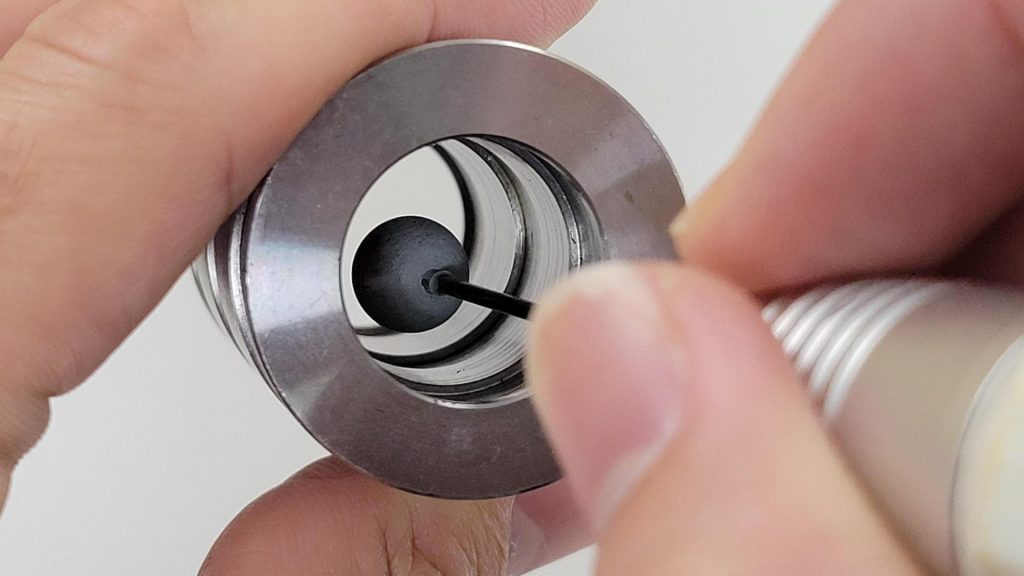
The Flexible Shaft challenges the conventional assumption that a longer tool is harder to handle. It combines extended reach with stable finishing.
For a neuroscience-based explanation of why the Flexible Shaft is easy to use, please also read the following article:
Why XEBEC Stone Flexible Shaft Is Easy to Use: A Neuroscientific Perspective (add in link to new blog)
Please note that the Flexible Shaft must not be used with pneumatic rotary grinders.
Their rotational speed is difficult to control, and unexpectedly high speeds may damage the shaft.
Use a speed-controlled electric rotary grinder, such as XEBEC’s Mobile Micromotor System, and operate it at the recommended rotational speed.
Mobile Micromotor System | XEBEC TECHNOLOGY CO.,LTD.
A backscratcher extends the reach of your hand to relieve an itch on your back.
In the same way, the Flexible Shaft extends the reach of the tool tip to burrs that would otherwise be inaccessible.
Just as a backscratcher brings quick relief, the Flexible Shaft removes troublesome burrs at cross-hole intersections deep inside a bore.
That is why we can call it the backscratcher of deburring.
The content on this website reflects our company’s values and activities. Unauthorized reproduction or use is prohibited. If you wish to reproduce this content, please contact us in advance and obtain permission.
For advice on automating your deburring process, please contact us (customerservice@xebec-tech.co.jp).

